
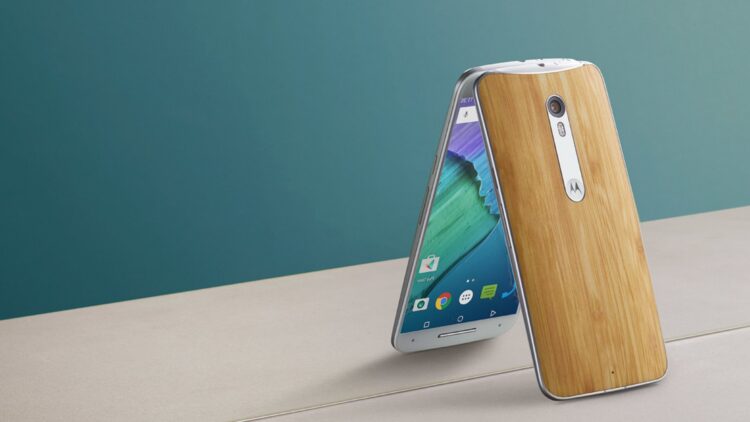
Despite Trump’s incessant efforts to ensure that products sold in the United States are domestically manufactured, the reality is that, at least for the technology industry, it is a completely unfeasible option. This is the case with Motorola, which, in an attempt to satisfy that market niche of customers who preferred domestically manufactured smartphones, experienced firsthand the difficulties it entails. Trump’s tariff policy is causing a considerable increase in the import price of the necessary parts for assembling mobile devices.
This further complicates domestic technological production, which is why companies choose countries like China or India to carry out that part of the process. Additionally, there is another problem that repels companies when it comes to manufacturing in the United States. It is the search for skilled labor, and also for retaining it in the workforce. Unlike China, Americans are neither trained for this type of jobs nor do they want them.
This results in the company having to invest additionally in training a workforce that will leave their jobs soon. This is why both the current trade policy and the high costs generated by the supply chain of exported parts make neither the U.S. economy nor the production characteristics offered by the country attractive for technology development companies.
Made in USA
The US economy is going through a rather delicate moment. Since Donald Trump’s arrival at the White House in January 2025, there have been countless changes he has made in the country, affecting absolutely all sectors. One of these changes is found in trade and production, for which Trump has created tariff percentage rates, based mainly on what he wants.
In recent months, these tariffs have been his weapon of blackmail and pressure against the world. While some countries have negotiated and will see them take effect today, August 7, 2025, others like India or China are still in negotiations. One of the goals of this new policy is to promote made in USA production, without having to rely on imports from other countries. However, the country faces numerous shortages and disadvantages that make this totally unfeasible, at least for the technology sector.
Motorola, Moto X
Motorola, in an attempt to satisfy that market niche that preferred a 100% national mobile device, experienced the difficulties of producing in the United States. They bet on the assembly of the device with which they competed against the iPhone and Samsung, the Moto X, but had to close the factory in Texas after a year.
Dennis Woodside is the former CEO of Motorola and the current CEO of the business software services provider Freshworks. During his experience leading Motorola from 2012 until it was bought by Lenovo in 2014, he highlights the difficulty of assembly in the United States. He explains the rationale that the vast majority of smartphones are manufactured in Asia or South America, where the necessary materials are available at a lower cost.
What is the problem with the workforce?
Woodside stated to CNN, “You have to have a very strong value proposition for the employee,” he said. “You have to be thoughtful about how automation is used, and be very smart about the whole economy to ensure that at the end of the day, you can be competitive in market pricing.” Motorola’s experience also highlighted the lack of training and intent of American citizens when it comes to working in factories.
It’s a type of job that Americans are not accustomed to and easily quit. A scenario completely opposite to that found in countries like China, where such jobs make up the most important sector. Tim Cook, Apple’s CEO, explained in Fortune magazine in 2017 that “the country offers a combination of ‘craft skills,’ ‘sophisticated robotics,’ and ‘the world of computing””.
In short, although companies would like to move their factories to the United States and offer 100% domestic products, the reality is quite complicated. For the moment, it doesn’t seem that this will be solved, and Trump’s tariffs are not an attractive solution either.