
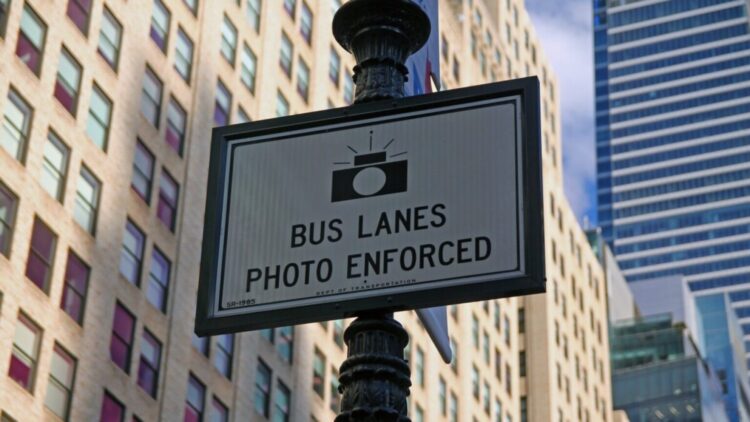
With the aim of improving urban mobility in New York, the authorities have launched the expansion of the ACE automated camera program, incorporating the new bus routes. This expansion affects Queens and the Bronx, where the goal is to eliminate lane and bus-only stop blockages by private vehicles. It is not only a measure aimed at improving passenger flow, reducing traffic and congestion, and providing greater safety and reliability of public transport for users, but it also seeks to penalize those who do not comply with road safety regulations. Offending drivers detected by the cameras will receive fines ranging from $50 to $250, depending on whether it is a first offense or if they are repeat offenders.
Public transport in big cities
In large cities, such as New York, public transportation serves a purpose beyond being just a service, as it becomes an important factor when we talk about economic and social efficiency. Bus public transportation is the option chosen by large groups of citizens both for its safety and accessibility. However, the infringing behavior of some private vehicles hinders the proper functioning of public transportation, also putting users at risk.
That is why dedicated bus lanes were introduced, which also include bus stops. This measure sped up driving and traffic, separating it from the congestion that occurs on regular roads. However, private vehicle drivers often invade these exclusive bus lanes to avoid the traffic jams that occur on the roads themselves, thereby committing an infraction.
Automatic Camera Enforcement Program in New York
In this scenario, the city has implemented the Automated Camera Enforcement (ACE) program, which is used to detect and penalize these offending drivers. According to an official statement from the NYC Metropolitan Transportation Authority: “The ACE program is a bus-mounted camera system that issues violations to vehicles occupying bus lanes, to double-parked vehicles along bus routes, and to vehicles blocking bus stops. When bus stops are blocked, buses can’t reach the curb, and people in wheelchairs are often unable to board. In these scenarios, buses are forced to pick up and drop off passengers in the street, creating a safety hazard for all passengers”.
Expansion and Sanctions in 2026
The ACE system is already successfully operating on 51 routes, transporting more than 840,000 people weekly. However, it has expanded to more routes by adding four additional lines on the Q6, Bx20, Bx3, and Bx7 routes, covering strategic areas in Queens and the Bronx, with the aim of reducing this bad practice by private drivers on these new routes. In addition, sanctions have also been toughened, as offenders detected through these cameras will receive an initial $50 fine as a warning. In case of repeat offenses, fines could rise up to $250. It is expected that with this measure and the new expansion, drivers will be discouraged from continuing to invade the exclusive bus lane.
Frequently asked questions
What exactly does the ACE program consist of and how does it work?
It is a system of cameras installed on buses that automatically fines vehicles that block dedicated lanes or bus stops. Its goal is to prevent passengers, especially people in wheelchairs, from being at risk when having to get on or off the bus in the middle of the street.
What are the new routes that will have this service in 2026?
The program, which already operates on 51 routes, has expanded to four additional lines to cover strategic areas in Queens and the Bronx. The new routes with these cameras are Q6, Bx20, Bx3, and Bx7.
How much are the fines for driving in the bus lane or blocking bus stops?
The penalty starts with a $50 fine for the first offense. If repeated, the cost of the penalty can progressively increase up to $250.