
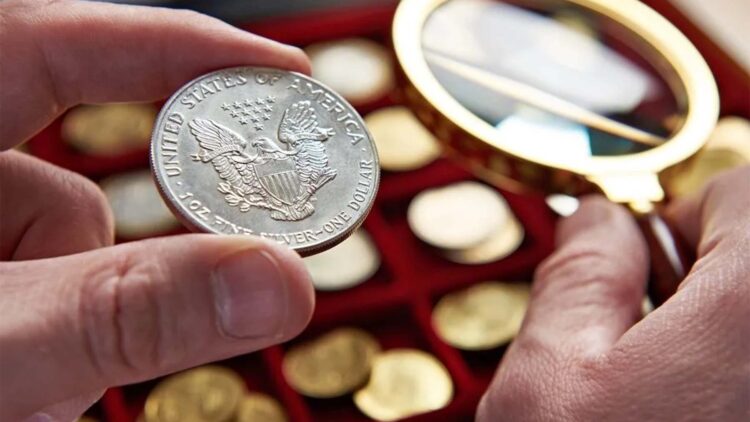
For collectors, some items from the 1970s are anything but typical. Certain coins from that decade can sell for hundreds, thousands, or even more than $17,000 at auction. The main reasons are not magic or good fortune, but rare minting errors, limited runs, and subtle design elements that most people miss.
These ten coins from the 1970s show how slight variations on a tiny piece of metal can transform ordinary change into significant money, from strange dates to amazing double strikes.
Hidden value and big money
There are two significant variations of the 1970-S Lincoln cent: large date and small date. “LIBERTY” is struck harder and the date’s numbers are slightly bigger on the large date penny. According to PCGS, these typically fetch more than $100, and one sold for roughly $1,500 at auction in 2019.
Although “LIBERTY” appears weaker and the “7” in the date is smaller, the small date version is nearly identical. For collectors, those small variations are very important. A small date 1970-S cent in top mint state (MS) condition sold for $2,464 at auction.
Pennies are not the only things that can have value. A 1978 Jefferson nickel that was inadvertently struck with a 1979 Susan B. Anthony dollar design—basically, a dollar image on a five-cent coin—is a well-known error. One example sold for more than $15,000 in 2014 due to its extreme rarity. High-quality Susan B. Anthony dollars can also fetch a high price; according to PCGS, one sold for $3,819 at an auction in 2014.
Proofs, double strikes, and weird little miracles
Proof coins are “special edition” versions of standard currency. They are crafted with extra care; the metal blanks are polished, the dies are sharper, and the finished product resembles jewelry.
The “deep cameo” 1971-S proof cent is one of the stars from the 1970s.The image really stands out because the background is dark and mirror-like and the design looks frosty and elevated. That striking contrast is a favorite among collectors. It goes beyond appearances; in 2004, one of these “deep cameo” pennies was sold for over $17,000.
The 1976-P bicentennial features a colonial drummer on the back instead of the standard eagle because it was created to commemorate 200 years of American independence. If they are in excellent condition, the Philadelphia-minted versions—those without a mint mark—can fetch a high price. One of these quarters sold for $2,520 in 2024.
The truly entertaining ones are the mistakes that follow. Reverse brockage on the 1974-S penny gives the impression that something went terribly wrong at the mint—in the best way possible. Abraham Lincoln is portrayed normally on the front, but a second, mirrored image of Lincoln from a 1973-S cent is on the back. The coin seems to have glitched. It became a unique collectible because of that peculiar double image. One of these odd-looking pennies sold for over $11,000 in 2020.
Why collectors care so much
Because the mint made a mistake, some coins from the 1970s are worth a lot. When the design is applied to the coin more than once, the letters or images appear almost repeated, a phenomenon known as a “double die” error. Once, a 1971-S penny with this front error sold for roughly $748.
Nickels also have peculiarities of their own. Parts of the design were crushed when a 1970-S Jefferson nickel was struck repeatedly and off-center. It is valued at about $2,000 because this type of error is uncommon.
An even stranger example is the 1973-D nickel, which features a striking off-center double strike with the second hit shifted about 75% away. It is obviously “wrong,” which is exactly why collectors love it. One of these started at roughly $900 at auction because of that glaring mistake.
Should you start checking your change?
Most of old coins aren’t very valuable, but if you look carefully, you might discover a tiny “mistake” that could worth a lot.